 Yulia S. Eltsova
Political scientist, [email protected]
Election Observation as an Institutional Factor: Assessing the Effect of Observer Presence on Electoral Outcomes in St. Petersburg in 2021
Abstract
This paper analyses the effect of observers on electoral outcomes in the 2021 elections to the Legislative Assembly of St. Petersburg. The study focuses on differences in these effects depending on the observer’s institutional status within the precinct election commission: that of a member with a deciding vote or that of a member acting in a consultative capacity. The empirical analysis is based on polling-station-level data from St. Petersburg. The dependent variables are overall turnout at the polling station and the share of votes cast outside the polling station. To reduce selection bias, the study applies methods of causal inference, including full matching and inverse probability weighting. The results show a consistently negative association between observer presence and the indicators under study. At the same time, observers serving as members with a deciding vote are more strongly associated with lower overall turnout, whereas members with consultative capacity are more strongly associated with lower home-voting turnout.
Introduction
Scholarship describes political regimes that preserve the formal procedures of elections while limiting competition and reducing the openness of the political process as electoral authoritarianism [5]. Since elections perform, among other things, a legitimizing function [2], the regime has an interest in holding them, but with a predictable outcome. The presence of observers seeking to prevent violations therefore creates tension, since it reduces the degree of control over the electoral outcome [1; 12].
Since the electoral system in this type of regime is adaptive and adjusts its practices in response to experience from the previous electoral cycle, the range of administrative and procedural barriers expands [17]. Opportunities for independent observation may become more difficult to secure, which in turn limits the potential for its development. Studies show that existing institutions consistently minimise factors that could call into question the stability of the political system’s operation [17].
The 2021 elections to the Legislative Assembly of St. Petersburg reproduced typical practices of electoral authoritarianism. The election was held concurrently with the State Duma election. At the same time, the campaign had a number of institutional features that distinguished it from previous electoral cycles. For the first time, a three-day voting period was introduced instead of a single voting day, which substantially changed the conditions for observation and procedural oversight. The multi-day format was accompanied by a high share of voting outside the polling station. In line with practices typical of authoritarian elections, the campaign was characterised by the exclusion of opposition candidates and by a number of institutional changes adopted shortly before the election. Some observers could be removed with the assistance of the police without a court ruling, that is, in breach of the established procedure.
Election observers are generally assumed to be capable of deterring or preventing fraud to varying degrees, depending on the political regime [15], institutional features, and the need for international legitimation [8]. In studies of elections in electoral autocracies, the role of observers is often reduced to an empirical test of whether an effect can be detected [3; 4; 9; 10; 15], that is, whether or not the regime will simply ignore them.
However, existing studies pay relatively little attention to the nature of the effect produced by observation itself, and more specifically to the exact mechanisms through which manipulative actions at the polling station are deterred. The levels at which manipulation is planned [14] and the institutional limits of observation must coincide if the aim is deterrence. Therefore, without taking the nature of this effect into account, conclusions about the observer effect may be incomplete: in electoral autocracies, it may not be the mere presence of an observer that has a deterrent effect, but rather the observer’s specific action in response to an intended dishonest act capable of distorting election results.
To demonstrate this, the paper presents an empirical analysis showing differences in the effects produced by two types of observers who had different degrees of institutional authorisation (and, consequently, different degrees of involvement in the work of election commissions), and who produced different results. Observers with the status of commission members with a deciding vote (MDV, that is, full members of the commission), had a significant effect and produced larger estimates in all tests than their less involved counterparts acting in a consultative capacity (MCC, that is, commission members with more limited rights to monitor the commission).
What Do We Know about Observer Effects? A Review of Cases
This paper assumes that those referred to in such studies as election observers may produce different effects because of the institutional characteristics of their status at the polling station. The political regime, however, should also be taken into account, since it defines the rules of the game. The cases discussed below partly illustrate how varied this effect can be. Some observers may be present in a purely passive capacity and may indeed do no more than observe the voting process, without any right to intervene. Others may have the authority to take an active part in organising the voting process and may therefore be able to influence the electoral outcome directly. This raises the following question: what do observers actually do in order to produce an effect?
For example, Sjoberg argues that the significance of observers’ influence depends on the nature of the political regime [15]. His findings show that the effect of observers varied across cases: in Azerbaijan and Kyrgyzstan, observer presence was empirically associated with lower turnout, whereas in Georgia no significant effect was observed. At the same time, fewer instances of fraud and ballot stuffing were recorded at observed polling stations in Kyrgyzstan and Georgia, while in Azerbaijan violations continued even in the presence of observers. In all three cases, observers were deployed and trained by a local non-governmental organisation, with at least two observers assigned to each polling station. Their high level of training is also emphasised, but the extent of their intervention in the voting process is not specified.
In the study of elections in Mozambique, observers were divided into international and domestic observers. The effectiveness of international missions depends on the authorities' interest in the external legitimisation of elections, as shown, for example, in the case of Armenia [9]; in the absence of such motivation, their influence is limited. Domestic observers deployed by Observatorio Eleitoral (a consortium of religious civil society organisations) proved more effective. They were present at polling stations throughout election day, including during the vote count, and had a better understanding of the local context, although they were not allowed to intervene in the process. International missions, by contrast, visited polling stations briefly and selectively, which reduced their ability to detect systematic violations.
The experiment showed that the continuous presence of domestic observers reduced the level of violations at polling stations. International observation had no overall effect on the extent of fraud; however, in opposition-leaning provinces, the presence of international observers was associated with an increase in the vote share of opposition parties [11].
Susan Hyde’s study of elections in Armenia examined the effect of international observers only. These observers were foreign citizens, often did not speak the local language, and worked with a standardised questionnaire, recording observations at each polling station they visited. They did not intervene in the voting process or point out violations to commission members [9].
Their visits to polling stations were brief and selective, and observers could decide for themselves which polling stations to visit. Despite the passive nature of observation, Hyde showed that at polling stations where international observers were present, the incumbent’s vote share was approximately 6 percentage points lower [9]. Therefore, even the mere presence of observers could have a deterrent effect.
Using data on domestic observers in Ghana in 2008, the authors conducted a randomised field experiment to estimate the causal effect of observation on irregularities in voter registration. The study focused on observers from CODEO, a coalition of 34 civil society organisations coordinated by the Ghana Center for Democratic Development. The observers had received training, were accredited by the election commission, and carried out continuous observation, without having the right to intervene in the process.
Voter registration lasted 13 days and took place at several local registration centres. The results showed that the presence of observers at some centres led to the displacement of registration irregularities to neighbouring centres without observers. Therefore, observation did not eliminate manipulation, but merely changed its spatial distribution. A reduction in irregularities at observed sites did not necessarily mean an overall reduction. Irregularities could be displaced to unobserved areas [10].
Existing studies, as a rule, do not analyse in detail the specific mechanisms through which observers affect the work of polling stations. In the study of electoral autocracies, it is clear that the mere presence of an external actor can deter only the most crude and visible violations, since such an observer is mainly able to detect overt dishonest actions. A substantial share of manipulation, however, is hidden and takes place within procedures that formally comply with the rules.
Detecting such practices requires deeper involvement in the work of the precinct election commission, access to documentation, and the ability to identify procedural irregularities and document falsification. Under electoral authoritarianism, deploying observers who lack real powers and then attempting to assess their influence empirically is unlikely to reveal a significant effect, since what is being measured is presence in an institutional environment that is not responsive to this type of control.
A different situation may arise when the strong interest of incumbents in specific results is taken into account and is countered by equally motivated civil society actors who have real powers to intervene in procedures: to inspect documentation, record violations, and respond when unlawful actions are suspected. In this case, observation may become an effective institutional counterweight.
The case closest in its conditions to St. Petersburg, as examined in this paper, is the analysis of the 2011 Moscow elections conducted by a group of authors. As the independent variable, the authors used the presence of observers from the civic organisation "Grazhdanin Nablyudatel" (Rus. for "Citizen Observer"). No clarification is provided as to whether these observers were MDVs or MCCs. Most likely, therefore, they were observers (in the sense of Federal Law No. 67-FZ), who had the right to examine voter lists, including information on voting outside the polling station, to examine protocols on voting results and receive certified copies of them, and to take photographs and make video recordings.
According to the results, at polling stations where observers were present, the vote share of the ruling party was, on average, 11 percentage points lower, while the vote share of opposition parties was higher. Turnout at these polling stations was 6.5 percentage points lower. On average, observation was carried out by three to four people at each polling station in the study sample [4].
This case was also analysed in another study, by Andrei Buzin and colleagues, who used their own sample. In their analysis, observers were formally accredited as correspondents of the newspaper Grazhdanskii Golos (Rus. for "Civic Voice"). Each observer remained at the polling station throughout election day. The results showed that turnout at unobserved polling stations was 4 percentage points higher, while the difference in the vote share of the party of power between observed and unobserved polling stations was about 3 percentage points. However, no statistically significant effect was ultimately identified [3]. It should be noted that at the time, representatives of accredited media had only the right to be present at the polling station throughout its working hours, including during the vote count, and to take photographs and make video recordings. This may explain the difference in the estimates obtained by the two studies of the same case.
The differences may also be explained by methodological features of the studies, in particular the number of observers involved and the degree to which polling stations were selected at random. Yet the nature of observation itself must also be taken into account: the extent to which an observer needs to be involved in the process in order to detect and prevent not only obvious forms of distortion, but also less visible forms that are procedurally concealed.
The Context of Observer Participation at Polling Stations
Since MDVs (commission members with a deciding vote) and MCCs (commission members acting in a consultative capacity) have different powers, they can be expected to have potentially different effects on the work of the precinct election commission. An MDV is approved by the territorial election commission for a five-year term, that is, for the duration of the commission's mandate, and takes part in all election campaigns held during that period. Such a member may be nominated to the commission by various associations: political parties, socially oriented public organisations, and electoral associations of citizens formed at the place of work, residence, study, or service. An MCC, by contrast, was appointed directly before the election, without approval by the TEC, by a political party or candidate participating in the election.
At the time of the September 2021 elections, an MCC had the same rights as an MDV (here and below, the reference is to Federal Law No. 67-FZ as amended on 4 June 2021), with the exception that they could not handle ballots or voters' personal data, or sign commission protocols and decisions (Art. 22). However, such members had full access to key PEC documentation and the right to take part in the discussion of all matters related to the organisation of voting (Art. 23).
The two statuses were equivalent in terms of the right to speak at commission meetings and submit proposals on matters relating to the commission's work, as well as to request that such matters be put to a vote (Art. 23). Members in both statuses also had the right to examine all documents and materials. They were likewise entitled to verify the accuracy of the count against the lists of voters who had taken part in voting, and to verify that ballots were correctly sorted during the count.
MDVs had, and continue to have, a special right to disagree with a commission decision: they may submit a written dissenting opinion, which is recorded in the commission protocol and attached to the decision in relation to which it is expressed (Art. 17). This opinion does not annul the commission's decision, but it may be used in a court appeal and serve as evidence of possible violations.
In electoral studies, inflated turnout is regarded as an indicator of electoral manipulation [15]. This occurs when opposition votes need to be offset by pro-incumbent votes. In addition, the results of previous elections show a certain increase in overall turnout in 2021 (Figure 1). For this reason, this study also tests whether observers had an effect on overall turnout at the polling station.
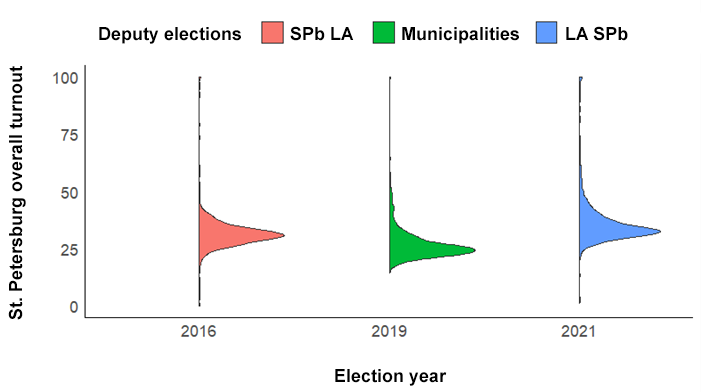
Figure 1. Changes in turnout over time. The figure shows the distribution of turnout in St. Petersburg for each year in which deputy elections were held between 2016 and 2021 (elections to the municipal councils of St. Petersburg’s intracity municipalities and elections to the Legislative Assembly of St. Petersburg).
However, given the new development represented by the high share of home voting, the study also examines the effect on turnout in this segment. According to official data from election commissions, the campaign saw a high number of applications for voting outside the polling station: at some polling stations, the share of such voters reached 20% of the total number of registered voters, which is atypical of previous elections (Figure 2). This proportion substantially exceeds the figures recorded in previous electoral cycles.
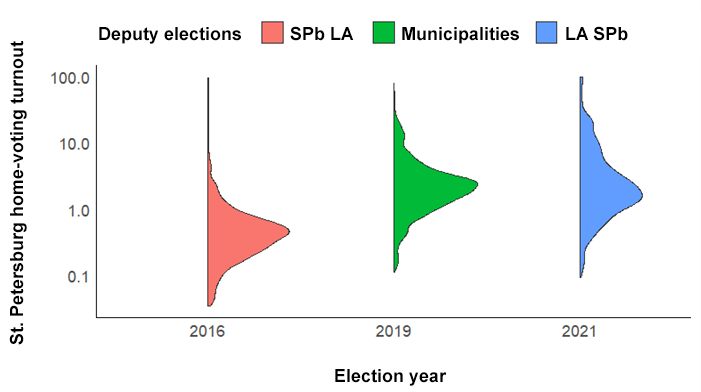
Figure 2. Changes in home-voting turnout over time. The figure shows the distribution of home-voting turnout in St. Petersburg (defined as the share of voters who voted outside the polling station as a proportion of total turnout at the polling station), for each year in which deputy elections were held between 2016 and 2021 (elections to the municipal councils of St. Petersburg’s intracity municipalities and elections to the Legislative Assembly of St. Petersburg).
At the same time, a precinct election commission is a collective body with established intra-group relations that exist before an independent MDV or MCC joins it. Polling stations may remain at the same addresses for decades. They are located in places where the state provides social services; often in schools, since there are schools in every district. In many cases, employees of these schools serve as commission members with a deciding vote. Their interpersonal ties are therefore formed not only through elections held every few years, but also through everyday working relations.
They are therefore likely to react negatively to a newcomer who urges them to follow procedures strictly in accordance with the law. An observer (whether an MDV or an MCC) thus faces communicative constraints. A large number of demanding observers at a polling station are more likely to induce the commission to act transparently; if there is only one such observer, this is much more difficult, although they may still be able to do so [13].
Taking the above factors into account, the study hypothesises that an observer with the powers of an MDV is likely to be more effective than their counterpart acting as an MCC. At the same time, the autonomy of MCCs may work in favour of preventing actions that distort the results.
Hypothesis 1: The ability to prevent actions that distort vote returns depends on the powers granted to the observer by the electoral legislation in force.
Hypothesis 1a: Observers acting as MCCs have fewer opportunities to prevent actions that distort vote returns than observers with the status of MDVs.
Data and Estimation Strategy
The population comprises all polling stations in St. Petersburg in the 2021 election, including temporary polling stations (n = 2,260). The analytical sample includes 494 polling stations located both in central districts and in outlying parts of the city (Figure 3); these areas are characterised by large-scale residential development, well-developed social infrastructure, and transport accessibility. The spatial distribution of the sample provides only limited grounds for treating it as representative of the full population of polling stations (Figure 4), although this is not crucial for the research question. The median values of both turnout measures differ between the population and the sample, with lower values observed in the sample.
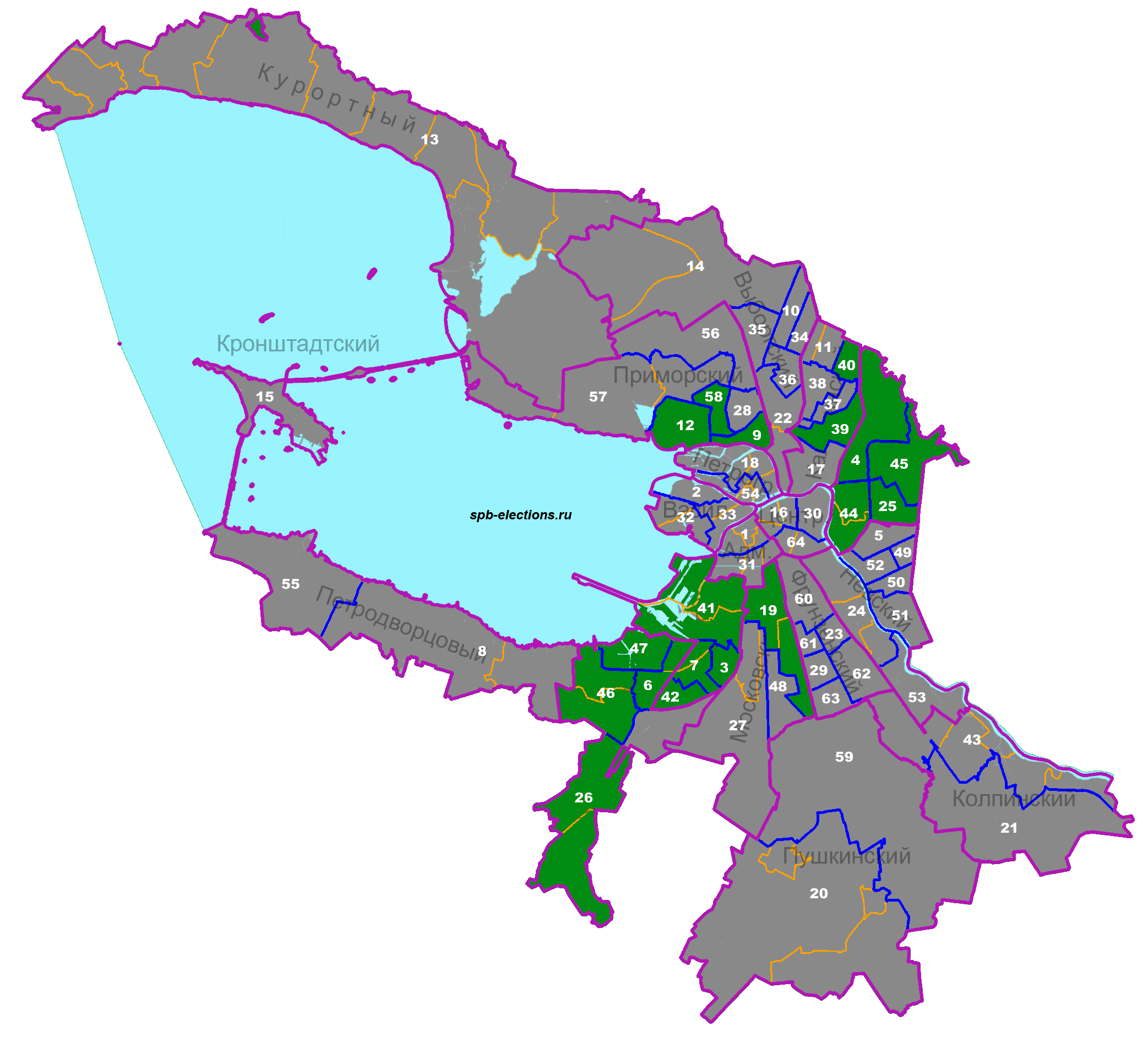
Figure 3. Map of St. Petersburg showing TEC boundaries in 2021. Precinct election commissions included in the sample are shown in green; those not included are shown in grey.
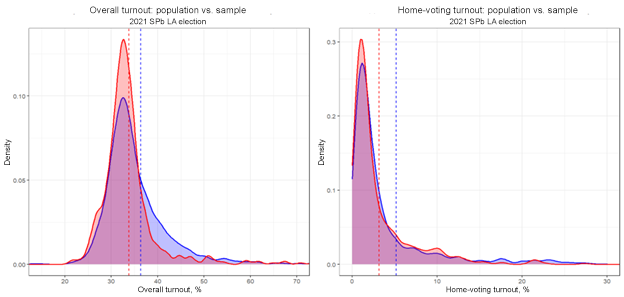
Figure 4. Density comparison of overall turnout and home-voting turnout in the sample and the population in the 2021 Legislative Assembly election. Red indicates the population distribution, while blue indicates the sample distribution. Median values are shown for both groups.
Polling stations were selected post hoc and included only cases in which the presence or absence of observers with the status of MDVs or MCCs was known with certainty. The data are grouped by territorial election commission (TEC): TECs that were either fully covered by observation or had almost no observation coverage, meaning less than 5% of polling stations, were excluded from the sample. Figure 5 shows which territorial election commissions (TECs) were included in the empirical sample.
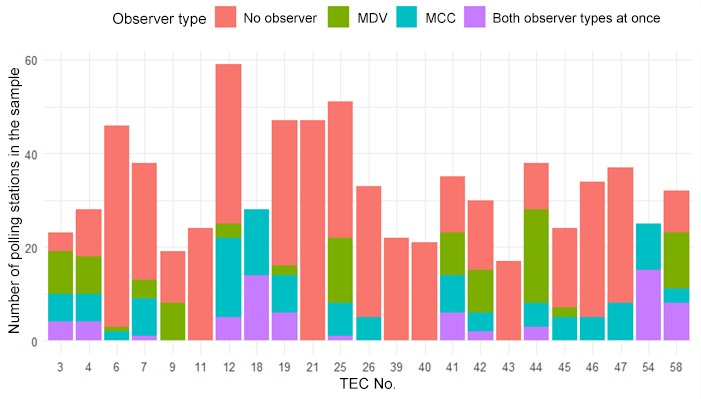
Figure 5. Distribution of treatment across PECs in the 2021 Legislative Assembly election. The figure shows the presence or absence of observers at polling stations, grouped by TEC, distinguishing between MDVs, MCCs, and cases in which both types of observer were present at the same polling station. Only polling stations for which the author has available data are included.
The control group consists of 299 polling stations without observers. The treatment groups comprise 100 polling stations where only MDVs were present and 95 polling stations where only MCCs were present. Since the data are observational, improving the validity of causal inferences requires adjustment for potential endogeneity in the relationship between the treatment and outcome variables. To this end, the analysis includes sets of confounding variables that block potential common causes of observer presence and electoral results.
These common causes include: (1) indicators of electoral activity at the polling station (historical turnout levels and support for pro-government candidates); (2) characteristics of precinct election commission management (the nominating body of the PEC chair, the appointment of a new chair, and a change of the nominating body); and (3) territorial specificities and institutional features of the TEC. Some unobserved factors – the socio-demographic and socio-economic characteristics of the district, as well as local organisational conditions – are captured indirectly through the inclusion of TECs. An additional benefit of including TECs is that it helps eliminate sources of bias in the final estimate. This is because territorial subordination of the election commission is treated as one of the key factors due to differences in TEC management practices. Electoral activity is controlled for through turnout indicators from previous elections in 2019 and 2020, or through home-voting turnout in 2019 for models estimating the effect on home voting, as well as through support for the ruling party and the share of "yes" votes in the constitutional amendments referendum. To account for the influence of the PEC chair, binary variables are used: whether the PEC chair was nominated by United Russia, whether a new chair was appointed shortly before the 2021 election, and whether the nominating body also changed shortly before the election.
The study estimates the effect of the presence of independent observers acting as MDVs or MCCs at polling stations, using methods of statistical causal inference. The quantity estimated is:
$$ATT = E (Y_i^1 - Y_i^0 \mid D = 1),$$
where the target causal effect under study, ATT, is the average treatment effect on the treated [16]. It shows what level of turnout a polling station would have had without an observer, given that an observer was in fact present at that polling station. The unit of observation, i, is a PEC in St. Petersburg in the September 2021 elections. Y denotes turnout (overall or home-voting). D = 1 indicates the presence of an observer from "Nablyudateli Peterburga" (Rus. for "St. Petersburg Observers") acting as an MCC; D = 0 indicates the absence of such an observer.
For the main estimation, full matching is used to match observations from the treatment and control groups on the basis of confounders [6]. The robustness of the results is tested using inverse probability weighting by the probability of
treatment assignment, which constructs a synthetic control group on the basis of the same covariates. Estimation is carried out using the G-formula [7], which makes it possible to obtain average causal effects [7]. The outcome variable is either overall turnout or home-voting turnout at the polling station.
The outcome variables in the analysis are overall turnout and turnout in voting outside the polling station (at home), that is, home-voting turnout The treatment variable is defined as the presence at the polling station of an observer with the status of an MDV or an MCC throughout the voting period. A polling station is considered treated if at least one observer with the relevant status was present for no fewer than two of the three voting days. These polling stations constitute the treatment group. The control group includes polling stations for which it is known with certainty that no observers with either status were present on any of the voting days.
Empirical Results and Findings
In general terms, the results show that the estimates have a consistently negative direction across all specifications. The use of two independent methods for reducing bias – full matching and weighting – demonstrates the consistency of the estimated effects and points to a stable tendency that can be interpreted as a manifestation of the "observer effect." At the same time, not all models produce statistically significant estimates, reflecting the limitations of the data and the sensitivity of the estimates to the set of control variables.
With respect to the effect on overall turnout, the empirical results after full matching show (Figure 6) that the effect of the presence of MDVs (-1.3) is somewhat stronger than that of MCCs (-0.9): under comparable estimation conditions, the estimates for members with a deciding vote are larger in magnitude and have lower p-values. At the same time, statistical significance remains borderline, indicating that the results may be sensitive to the model specification and the set of control variables. Nevertheless, given the consistent negative direction of the estimates across two independent methodological approaches, and significance at around the 2% level for MDVs, it is possible to assume a stable association between the presence of observers with this status and lower overall turnout.
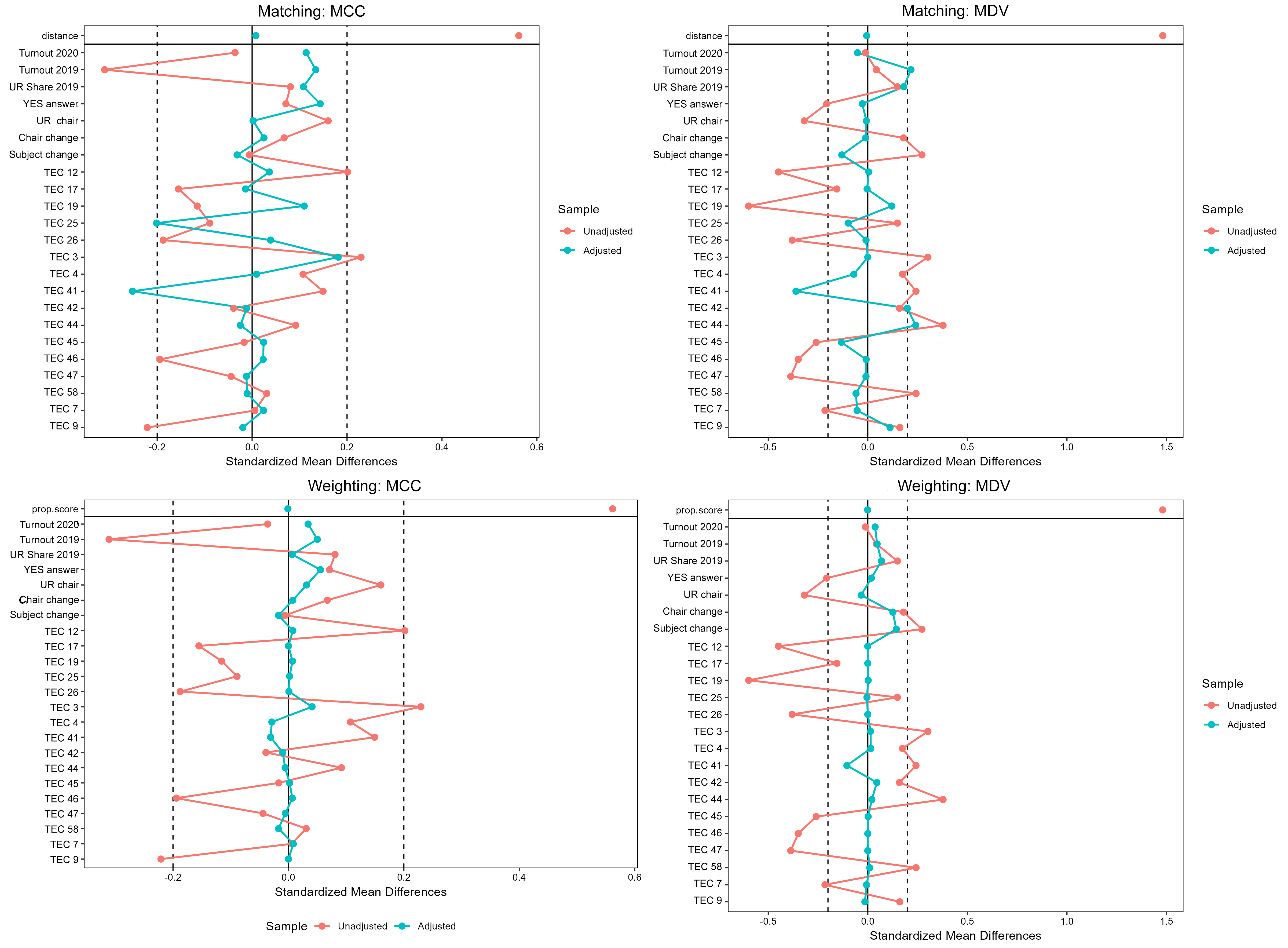
Figure 6. Covariate balance before and after full matching for MDVs and MCCs: overall turnout. The figure shows the distribution of TEC-level covariate values in the available sample after applying full matching and inverse probability weighting. Red indicates the unadjusted sample, while blue indicates the adjusted sample, with the corresponding method indicated.
In the analysis of the interval variable measuring the level of home voting, by contrast, observers acting as MCCs show the strongest and statistically supported effect: their presence is associated with a decrease in home-voting turnout of approximately 0.75 percentage points at the 1% significance level. Although MDVs produced an estimate of similar magnitude, it was not statistically significant. Despite the absence of an effect in the model estimating the probability that a polling station falls into the group with conditionally high home-voting turnout, MCCs have a negative effect on the overall level of home voting in the sample. In the model with the same specification, MDVs show no statistically significant effect, and the estimates for both statuses are relatively small.
In the synthetic sample obtained after weighting, MDVs also show no statistically significant effect (Figure 7), and the estimates for both statuses are relatively small.
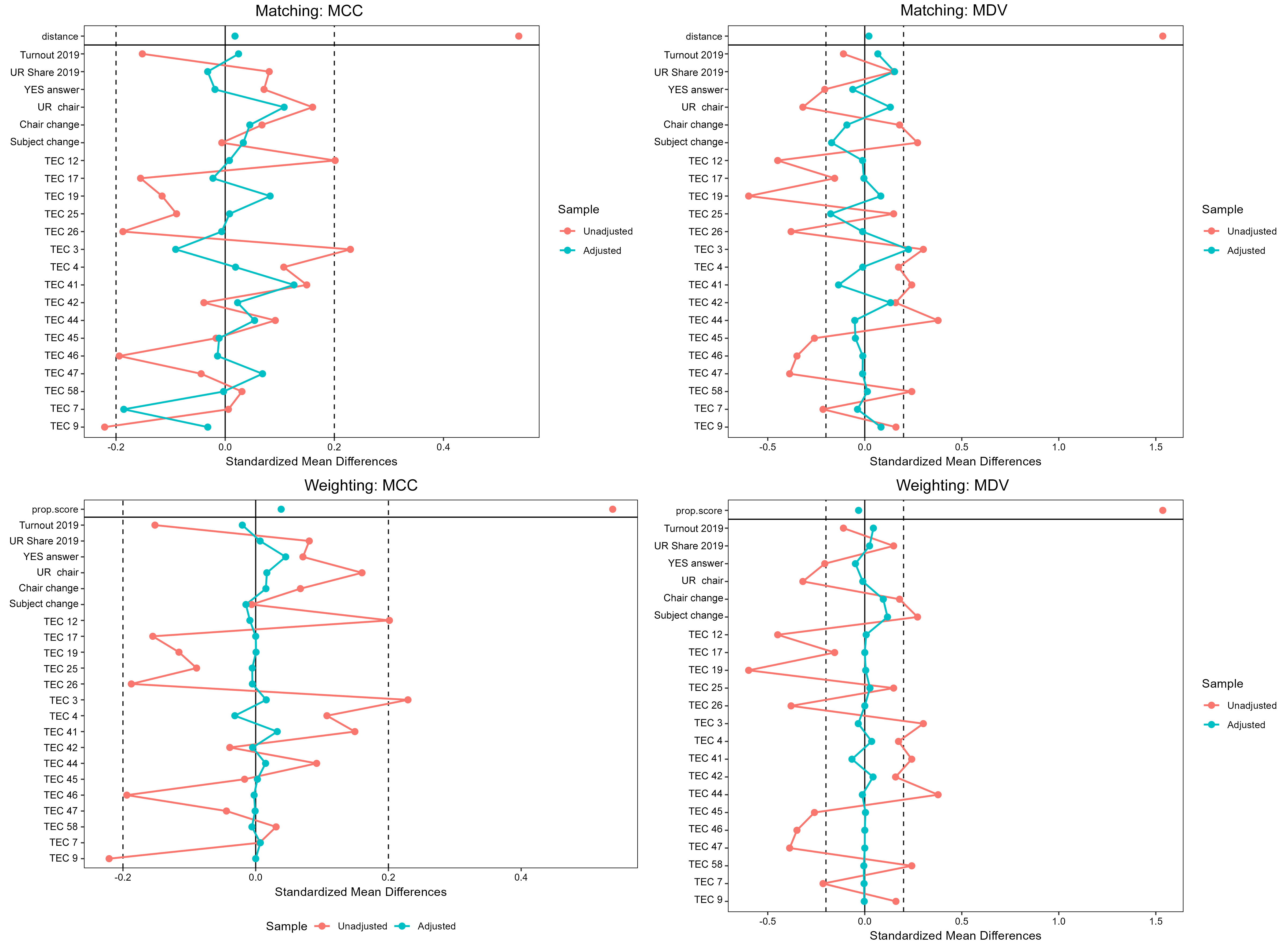
Figure 7. Covariate balance before and after inverse probability weighting for MDVs and MCCs: home-voting turnout. The figure shows the distribution of TEC-level covariate values in the available sample after applying full matching and inverse probability weighting. Red indicates the unadjusted sample, while blue indicates the adjusted sample, with the corresponding method indicated.
With respect to overall turnout, MDVs have a more pronounced effect than MCCs. Although the estimates for members acting in a consultative capacity are also negative, they are statistically weaker. This may be due to differences in the nature of participation: MDVs, being fully integrated into the work of the commission, have greater opportunities to monitor procedures and influence the behaviour of other PEC members. This may reduce the likelihood of practices that increase overall turnout. MCCs, who are less deeply involved in paperwork and communication, exert influence primarily through their presence, which, judging by the statistical significance, does not always lead to changes in the commission’s behaviour.
At the same time, the data suggest that MCCs have a noticeable deterrent effect on manipulation related to voting outside the polling station. If inflated home voting is treated as an empirical indicator of such manipulation, observers with this status contribute to reducing its scale.
The causal-inference analysis shows that observer presence is associated with lower overall turnout, as well as with a reduction in the level of home voting and in the probability of inflated home-voting values. The estimates remain stable across different identification strategies – full matching in Table 1 and weighting in Table 2 – which strengthens confidence in the conclusion that observers affect the corresponding electoral parameters. In addition, observers with different statuses – MDVs, who are more integrated into the work of the commission, and MCCs, who are less formally involved – produced different effects under identical specifications. This points to differences in the nature of their participation in polling-station operations.
Table 1. G-formula estimates of average causal effects after full matching, based on matched observations from the control and treatment groups
| Model | estimate | std. error | statistic | p.value | CI |
| MCC: Effect on overall turnout | -0.892* | 0.42 | -2.14 | 0.03 | [-1.709;-0.075] |
| MDV: Effect on overall turnout | -1.268* | 0.54 | -2.33 | 0.02 | [-2.334;-0.202] |
| MCC: Effect on home-voting turnout | -0.752** | 0.28 | -2.72 | 0.01 | [-1.294;-0.209] |
| MDV: Effect on home-voting turnout | -0.733 | 0.53 | -1.38 | 0.17 | [-1.773;0.307] |
| MCC: Effect on the probability of home-voting turnou > 7% | -0.046 | 0.03 | -1.71 | 0.09 | [-0.098;0.007] |
| MDV: Effect on the probability of home-voting turnou > 7% | -0.119* | 0.06 | -2.02 | 0.04 | [-0.235;-0.003] |
* p-value < 0.05
** p-value < 0.01
Table 2. G-formula estimates of average causal effects after inverse probability weighting by the probability of treatment assignment, used to construct a synthetic control group within the sample
| Model | estimate | std. error | statistic | p.value | CI |
| MCC: Effect on overall turnout | -0.95* | 0.42 | -2.24 | 0.02 | [-1.779;-0.12] |
| MDV: Effect on overall turnout | -1.293** | 0.49 | -2.62 | 0.01 | [-2.261;-0.325] |
| MCC: Effect on home-voting turnout | -0.755** | 0.24 | -3.13 | 0.00 | [-1.228;-0.282] |
| MDV: Effect on home-voting turnout | -0.483 | 0.45 | -1.08 | 0.28 | [-1.359;0.393] |
| MCC: Effect on the probability of home-voting turnou > 7% | -0.041 | 0.02 | -1.72 | 0.09 | [-0.088;0.006] |
| MDV: Effect on the probability of home-voting turnou > 7% | -0.113* | 0.05 | -2.12 | 0.03 | [-0.217;-0.009] |
* p-value < 0.05
** p-value < 0.01
Figures 6 and 7 show the distribution of covariate values before and after full matching for MDVs and MCCs for overall turnout (Figure 6) and home-voting turnout (Figure 7). After adjustment, the covariates became balanced at a standardised mean difference of 0.2, which is an acceptable threshold for inference, though not an ideal one.
Conclusion
The study compared three groups of polling stations: polling stations without independent observers, polling stations where observers were present as MDVs, and polling stations where observers were present as MCCs.
The results show that different observer statuses are associated with different effects. Observers with the status of MDVs, being permanent members of the commission and having access to its internal work, were associated with lower overall turnout. At the same time, their presence was not accompanied by significant changes in indicators of voting outside the polling station. Observers acting as MCCs, by contrast, showed a more pronounced association specifically with lower home-voting turnout.
Distinguishing between observers by status proved crucial for interpreting the results. If observation were treated as a single phenomenon, differences between the mechanisms of its effect might have remained unnoticed. In reality, the effect of observation is associated not only with the fact of an observer’s presence at the polling station, but also with the degree of their institutional involvement in the commission's activities.
The results indicate that the nature of observation matters when assessing its effect. The ability to examine commission documentation, take part in the discussion of decisions, and record procedural irregularities creates different conditions for monitoring the voting process. Accordingly, different observer statuses, although at first sight very similar, are associated with different changes in the observed electoral indicators.
Therefore, the analysis shows that studies of observer effects should take into account not only observer presence at the polling station, but also their institutional opportunities to participate in the commission's activities. It is these differences that help explain why observers with different statuses produce different effects on the same electoral parameters.
The author is grateful to Vladimir Gelman and Vladimir Kostromin for their valuable comments, expert guidance, and support in the preparation of this article.
Received 18.01.2026, revision received 10.03.2026.
References
- Asunka J., Brierley S., Golden M., Kramon E., Ofosu G. Electoral Fraud or Violence: The Effect of Observers on Party Manipulation Strategies. – British Journal of Political Science. 2019. Vol. 49. No. 1. P. 129–151. DOI: 10.1017/S0007123416000491
- Bush S.S., Prather L. The Promise and Limits of Election Observers in Building Election Credibility. – The Journal of Politics. 2017. Vol. 79. No. 3. P. 921–935.
- Buzin A., Brondum K. Election Observer Effects: A Field Experiment in the Russian Duma Election of 2011. – Electoral Studies. 2016. Vol. 44. P. 184–191. DOI: 10.1016/j.electstud.2016.06.018
- Enikolopov R., Korovkin V., Petrova M., Sonin K., Zakharov A. Field Experiment Estimate of Electoral Fraud in Russian Parliamentary Elections. – Proceedings of the National Academy of Sciences (PNAS). 2013. Vol. 110. No. 2. P. 448–452. DOI: 10.1073/pnas.1206770110
- Gelman V.Ya. Avtoritarnaya Rossiya: Begstvo ot svobody, ili Pochemu u nas ne prizhivaetsya demokratiya [Authoritarian Russia: Flight from Freedom, or Why Democracy Does Not Take Root Here]. Moscow: Alpina Publisher. 2021. 336 p. (In Russ.)
- Hansen B.B., Klopfer S.O. Optimal Full Matching and Related Designs via Network Flows. – Journal of Computational and Graphical Statistics. 2006. Vol. 15. No. 3. P. 609–627. DOI: 10.1198/106186006X137047
- Hernán M.A., Robins J.M. Causal Inference: What If. Boca Raton: CRC Press. 2024.
- Hyde S.D., Marinov N. Information and Self-Enforcing Democracy: The Role of International Election Observation. – International Organization. 2014. Vol. 68. No. 2. P. 329–359.
- Hyde S. The Observer Effect in International Politics: Evidence from a Natural Experiment. – World Politics. 2007. Vol. 60. No. 1. P. 37–63. DOI: 10.1353/wp.0.0001
- Ichino N., Schündeln M. Deterring or Displacing Electoral Irregularities? Spillover Effects of Observers in a Randomized Field Experiment in Ghana. – The Journal of Politics. 2012. Vol. 74. No. 1. P. 292–307. DOI: 10.1017/S0022381611001368
- Leeffers S., Vicente P. Does Electoral Observation Influence Electoral Results? Experimental Evidence for Domestic and International Observers in Mozambique. – World Development. 2019. Vol. 114. P. 42–58. DOI: 10.1016/j.worlddev.2018.09.021
- Merloe P. Authoritarianism Goes Global: Election Monitoring vs. Disinformation. – Journal of Democracy. 2015. Vol. 26. No. 3. P. 79–93. DOI: 10.1353/jod.2015.0053
- Prikolota M.D. Street-Level Bureaucracy Restrictions: What Influences the Election Commissions in Saint Petersburg? – Electoral Politics. 2020. No. 1 (3). P. 2. - https://electoralpolitics.org/en/articles/ogranicheniia-v-rabote-ulichnoi-biurokratii-chto-vliiaet-na-rabotu-uchastkovykh-izbiratelnykh-komissii-sankt-peterburga/
- Schedler A. Elections Without Democracy: The Menu of Manipulation. – Journal of Democracy. 2002. Vol. 13. No. 2. P. 36–50. DOI: 10.1353/jod.2002.0031
- Sjoberg F.M. Making Voters Count: Evidence from Field Experiments about the Efficacy of Domestic Election Observation. – SSRN Working Paper. 2012. URL: https://papers.ssrn.com/sol3/papers.cfm?abstract_id=2133592 (accessed 18.01.2026). DOI: 10.2139/ssrn.2133592 - https://papers.ssrn.com/sol3/papers.cfm?abstract_id=2133592
- Sokolov B.O. Tselevye kauzalnye effekty v sotsialnykh issledovaniyakh [Target Causal Effects in Social Research]. – Sotsiologiya: metodologiya, metody, matematicheskoe modelirovanie (Sotsiologiya:4M). 2025. No. 61. P. 7–76. DOI: 10.19181/4m.2025.34.2.1 (In Russ.)
- Zavadskaya M., Grömping M., Martinez i Coma F. Electoral Sources of Authoritarian Resilience in Russia: Varieties of Electoral Malpractice, 2007–2016. – Demokratizatsiya: The Journal of Post-Soviet Democratization. 2017. Vol. 25. No. 4. P. 455–480.